
Search Kalifornsky Released Inmates
Kalifornsky Released Inmates searches usually start with the Kenai Peninsula law enforcement path and then move to the live custody screen, the court file, or the DOC record that explains where the person went next. That order matters because Kalifornsky often follows the peninsula detention route instead of a local jail track. If you already know the date, the name, or the trooper contact, the search gets easier fast. If you only know the person was booked in the Kalifornsky area, start with the state office that likely handled the first contact and then follow the record trail outward from there.
Kalifornsky Released Inmates Search Basics
For Kalifornsky Released Inmates records, the first question is whether the person is still in the local response area or has already moved into state custody. Alaska State Troopers provide law enforcement for the Kalifornsky area, so a trooper contact may be the earliest public clue in the chain. That matters because the first custody source usually tells you where to look next. If the arrest happened on the highway, near a peninsula stop, or during a transport between communities, the trooper note may be the first record you can actually use.
The best starting point is the state office that made the first contact, then the live custody screen. The DPS site at dps.alaska.gov gives the public safety context behind the search, while Alaska VINE at vinelink.com is the fastest way to confirm whether the person is still in custody, has moved, or has already been released. That sequence keeps Kalifornsky Released Inmates research focused on the right office and the right time frame.
When the name is common, the date and the agency matter just as much as the spelling. A search can look blank if the record is still local, if the transfer has not updated, or if the wrong agency was checked first. Kalifornsky Released Inmates work usually goes faster when you match the first stop to the likely law enforcement source before you move on.
| State custody | vinelink.com |
|---|---|
| State public safety | dps.alaska.gov |
| Court records | records.courts.alaska.gov |
| DOC research | doc.alaska.gov/administrative-services/research-records |
Wildwood Correctional Complex and Kalifornsky Released Inmates
Wildwood Correctional Complex is the main custody destination to watch when a Kalifornsky Released Inmates search moves beyond the initial stop. The DOC research file places Wildwood in Kenai, and that makes it the key detention site for the peninsula record path. If the person was booked in Kalifornsky, the next useful record may be the one that shows a move to Wildwood instead of a city jail hold. That is a common pattern on the Kenai Peninsula, where one arrest can turn into a state custody record very quickly.
The DOC research page at doc.alaska.gov/administrative-services/research-records is the official reference for that broader records trail. It matters because the custody answer may depend on more than a current jail screen. Kalifornsky searches often get clearer once you separate the local arrest note from the custody site that now holds the person.
The DOC research image below fits this section because Wildwood is the facility most likely to answer the next custody question after a Kalifornsky arrest.
That image is useful because Kalifornsky cases often move to Wildwood before the public trail settles down.
When the status is still unclear, compare the local arrest date, the Wildwood custody screen, and the court event. That three-part check usually tells you whether the person is still in custody, already released, or waiting on a later court action.
Kalifornsky Released Inmates and Court Records
Court records explain why a custody status changed, and that is why they matter so much in Kalifornsky Released Inmates research. The statewide court portal at records.courts.alaska.gov is the public case-access tool for charges, hearings, and case events. The main court site at courts.alaska.gov explains the court structure behind the record and gives the public access framework for the statewide system.
A court entry can show a bail decision, a dismissal, a transfer, or a sentence that does not show up clearly in the custody screen. That is the reason the court file and the custody result should be read together. If the record started in Kalifornsky but the next step happened in Kenai, the docket is often the piece that connects those dots.
For a Kalifornsky search, the court portal image below is the cleanest visual match because it represents the public side of the case file.
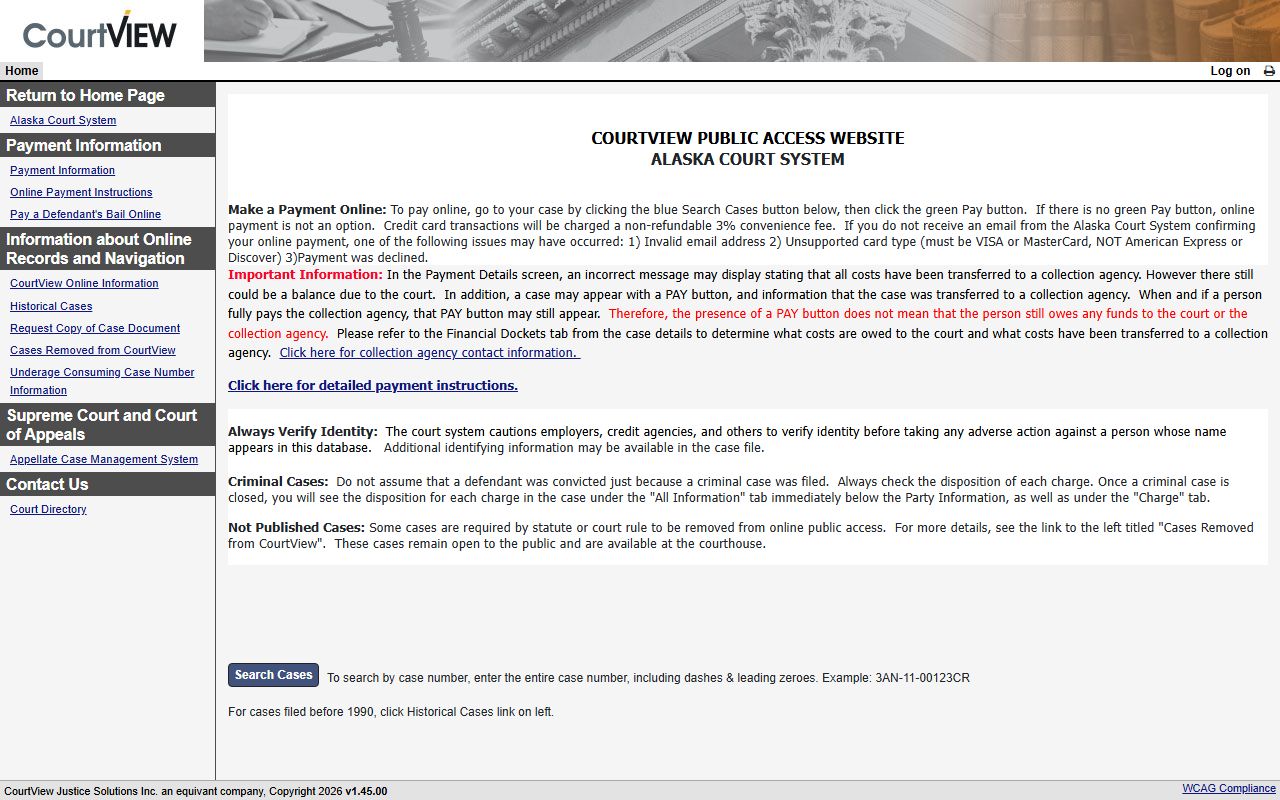
The portal is especially useful when the arrest report has gone stale and you need the legal event that explains the release or transfer.
The court site also helps you verify that the name, date, and case number line up before you ask for more records. That keeps the search on the right file and avoids a lot of unnecessary back-and-forth.
Kalifornsky Released Inmates and VINE
Alaska VINE is the quickest public tool for checking Kalifornsky Released Inmates status because it is designed for live custody updates. If you need to know whether a person is still in custody, has moved, or has already been released, VINE usually gives the fastest answer. That makes it useful when the peninsula-side record, the court file, and the DOC screen do not all show the same timing.
The official Alaska VINE page at vinelink.com is the best link to use for that check. It is especially helpful when the Kalifornsky search is tied to Wildwood Correctional Complex or another Kenai Peninsula facility. A quick search can show whether you need a court follow-up, a records request, or no follow-up at all because the status is already resolved.
When Kalifornsky is part of the search, VINE often bridges the gap between the local arrest and the state custody result. If the city-side note is old but the VINE result is current, trust the live screen for the status and use the court file to understand the background.
The VINE image below comes from the official notification system and is the best state fallback visual for a Kalifornsky Released Inmates search.
That image fits the page because live release notifications are the fastest way to confirm a current Kalifornsky custody change.
Kalifornsky Released Inmates Record Limits
Kalifornsky Released Inmates records are public only to the extent that Alaska rules allow. A custody search may show the fact of detention or release while leaving out sensitive details that are protected by privacy rules or agency practice. That can include personal information, security details, and some victim related material. If a page looks incomplete, that does not always mean the record is missing. It often means the office is giving you the parts that are releasable and holding back the rest.
The practical effect is simple. A live custody check, a police record, and a court file may each tell a different part of the story, and each office may limit a different detail. If you need the full picture, compare the live status first, then the case file, then the originating state record. That sequence is usually better than repeating the same request to the same office.
The Alaska Public Records Act guide at rcfp.org/open-government-guide/alaska is a useful plain-language reference when a Kalifornsky Released Inmates record seems to stop short. The statute page at akleg.gov/basis/statutes.asp#40.25 explains the basic access framework behind that result.
The public-records image below is a good fit because it represents the balance between open access and redaction in Alaska records work.
That source helps when an agency gives you part of the file but not the whole story.
Historical and Federal Records
Older Kalifornsky Released Inmates searches often require the Alaska State Archives at archives.alaska.gov. That is the right fallback when a case is historic, when the online custody tools no longer show the person, or when you need to trace an older state record that has moved out of the active system. The archives are especially helpful if you are trying to understand where a long running custody trail started before the current electronic records were in place.
If the person left Alaska custody and moved into the federal system, the Bureau of Prisons locator at bop.gov/inmateloc is the last official check. A state arrest can eventually lead to a federal sentence, and the local search trail may stop looking complete once that happens. If the person is no longer in an Alaska facility, the federal locator becomes the most direct way to confirm the current status.
For broader DOC background, the research and records page at doc.alaska.gov/administrative-services/research-records is useful because it explains the kind of offender information DOC maintains for research and public reference. It is not a substitute for a live search, but it helps when the Kalifornsky record you need is historical rather than current.
The state archives image below fits this section because many older Alaska records move there after the active custody trail ends.
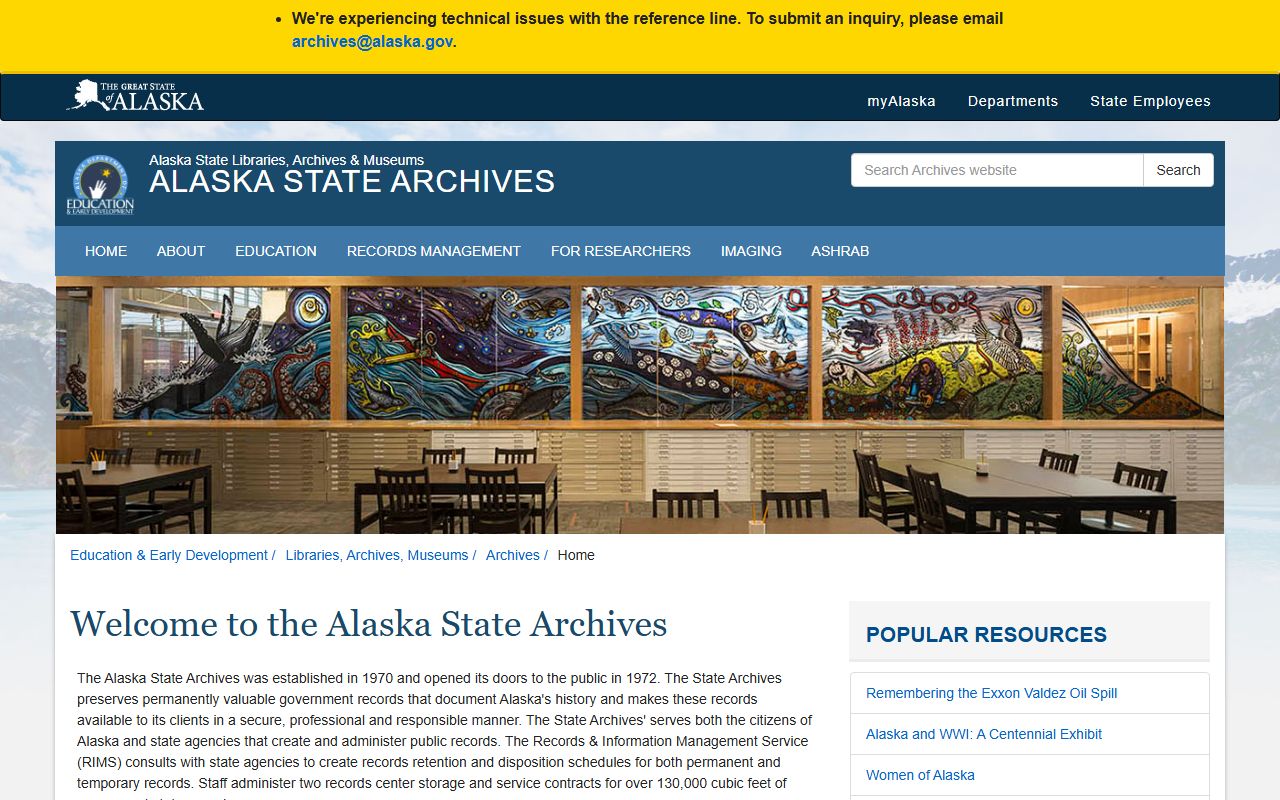
That archive source is the right step when a Kalifornsky case is too old for VINE but still worth tracing.