
Hoonah-Angoon Census Area Released Inmates Records
Hoonah-Angoon Census Area Released Inmates searches usually begin with Alaska State Troopers, then move to VINE, court records, or DOC research if the person has already been transferred into state custody. That order matters because this census area spans multiple small communities that are often reached by boat or plane, so the first custody clue may not be the last record you need. If you already know the name, the date, or the community, the search gets easier fast. If you only know the person was booked somewhere in Hoonah-Angoon, start with the trooper record and then follow the public record trail outward from there.
Hoonah-Angoon Census Area Released Inmates Search Basics
For Hoonah-Angoon Census Area Released Inmates records, the first question is whether the person is still in the local response area or has already moved into the state system. Alaska State Troopers provide primary law enforcement for the Hoonah-Angoon Census Area, and that matters because the region depends on trooper response for many detention and transport events. If the arrest happened in one of the smaller communities, the first record may be a trooper note rather than a local jail note.
Because the communities are spread out and often accessible only by boat or plane, the live custody answer often comes from Alaska VINE after the person enters state custody. VINE can confirm whether the person is still in custody, has moved, or has already been released. That live result is the fastest way to tell whether the search should stay local or shift to a state-facility record.
If you only have a village name or a rough date, use the trooper record first and then compare it with VINE. That keeps the search focused and helps avoid mixing a Hoonah-Angoon case with a record from another Alaska community.
Hoonah-Angoon Census Area Released Inmates and State Troopers
State troopers are the core local source for Hoonah-Angoon Census Area Released Inmates research because they handle the first law-enforcement step in much of the area. A trooper report can show the stop, the arrest, the transfer point, or the route into a state facility. When you want the earliest public clue, that is the record to look for first.
The Alaska DPS site at dps.alaska.gov is the official public safety source for that work. It also gives the broader state context for a Hoonah-Angoon arrest. In a region made up of small coastal communities, the DPS trail matters because it can explain why the custody result appears in more than one place. A single stop can lead to a later state record before the public trail feels complete.
Hoonah-Angoon searches are easier when you keep the trooper side and the custody side together. One record tells you who made the first contact. The other tells you where the person ended up.
The state safety system is often the only local source when the case begins by boat or by aircraft rather than in a city jail.
Hoonah-Angoon Census Area Released Inmates and Court Records
Court records are the next step in a Hoonah-Angoon Census Area Released Inmates search because they explain why the custody status changed. The statewide court portal at records.courts.alaska.gov is the public case-access tool for charges, hearings, and case events. The main court site at courts.alaska.gov explains the court structure behind the record. Together, those sources move the search from a trooper contact to the case file that explains the result.
In Hoonah-Angoon, a case can move from a village contact to a later hearing or transfer with little local detention in between. The docket may show the bail action, the hearing, the transfer, or the later release order that makes the custody result understandable. When the trooper note and the state record do not match right away, the court file is usually the part that connects the dots.
The Alaska Court System records portal image below fits that step because it represents the public case-access point that usually follows the trooper and custody check.
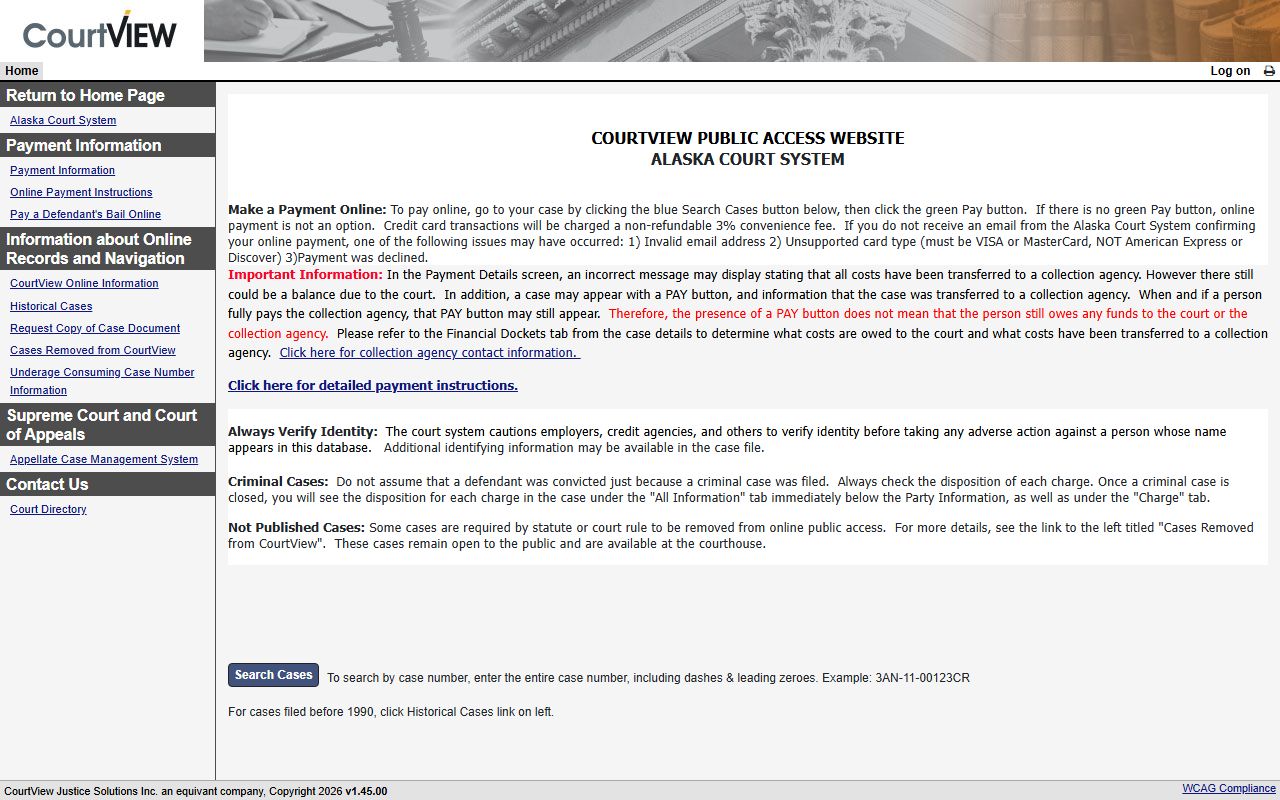
Once the docket is visible, it is easier to see whether the custody change followed a hearing, a transfer, or a later release order.
VINE and DOC for Hoonah-Angoon Census Area Released Inmates
VINE is the fastest live status tool for Hoonah-Angoon Census Area Released Inmates research. The official Alaska VINE service at vinelink.com can confirm whether the person is still in custody, has moved, or has already been released. That makes it the right first check when you need the current status and do not want to wait for a records request to work its way through the system.
The Alaska Department of Corrections pages at doc.alaska.gov and the DOC Research and Records office at doc.alaska.gov/administrative-services/research-records are the next official sources when the record has moved beyond the live screen. They help with inmate profile questions, facility history, and the records trail behind a state custody placement. In a region where travel is often by boat or plane, the DOC side often becomes the only way to understand where the person went after the local hold ended.
The VINE image below fits this step because the live status check is usually the first public answer that shows whether the person stayed local or moved into the state system.
That image belongs here because VINE is the first source that usually reflects a status change before the other records catch up.
Hoonah-Angoon Census Area Released Inmates Record Limits
Hoonah-Angoon Census Area Released Inmates records are public in many situations, but Alaska still limits what can be shown. The public records statute at akleg.gov/basis/statutes.asp#40.25 is the legal reference for access, while the Alaska Open Government Guide at rcfp.org/open-government-guide/alaska gives a plain-language explanation of how public access and redaction work. That means the status may be visible even when some supporting details are not.
Victim notice is a separate part of the process. The Alaska Victim Information and Notification service at vccb.alaska.gov/victim-notification/ is the official route for those release alerts. The Alaska DPS site at dps.alaska.gov is also useful when the arrest or transfer came through state public safety work rather than a local city office. In a remote coastal region, those official sources help explain why a search can be complete without exposing every line of the file.
The public-records image below matches that access boundary and shows why a partial record can still be a valid public record.
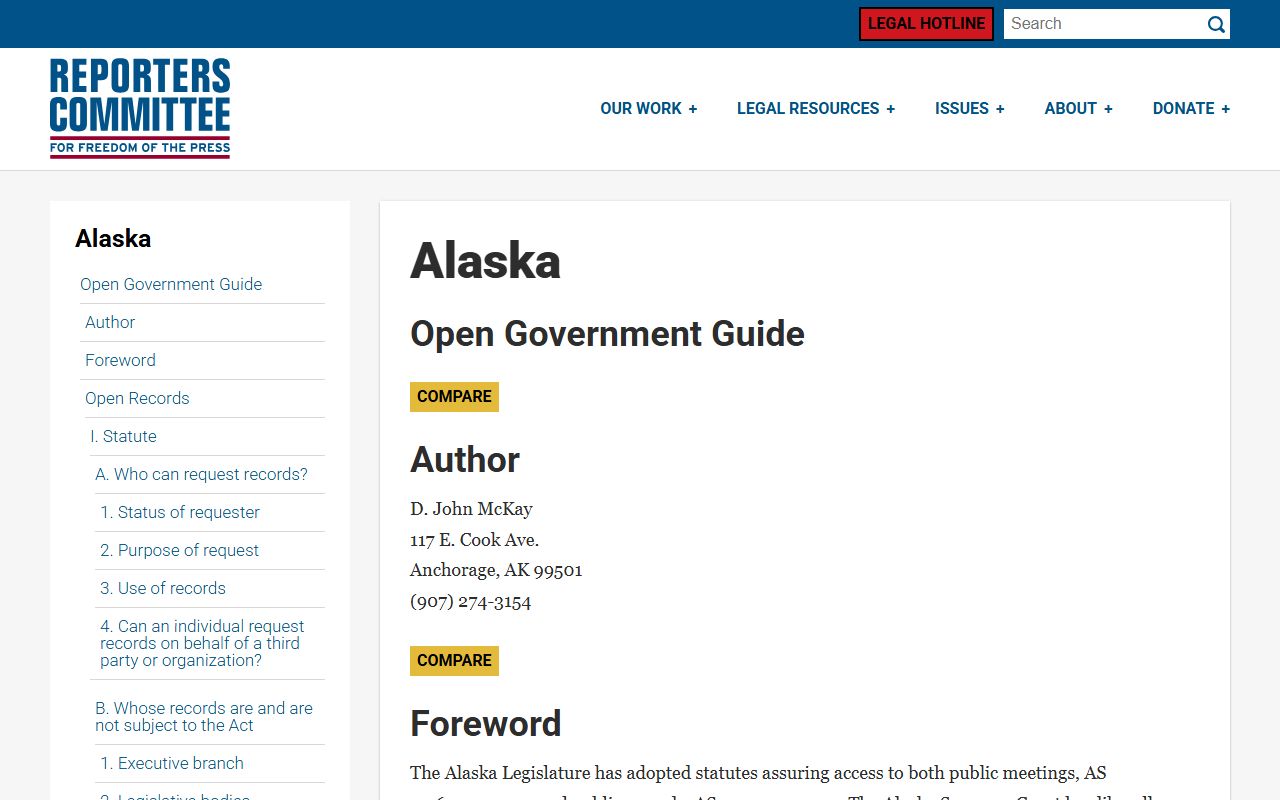
It is a reminder that the search may answer the custody question even when other details stay protected.
Historical and Federal Records for Hoonah-Angoon Census Area
Some Hoonah-Angoon Census Area Released Inmates searches go back far enough that the live custody tools no longer show the full story. When that happens, the Alaska State Archives at archives.alaska.gov can be the best official next step. Archives are useful when the record is old, the facility is gone, or the file came from a paper system that no longer feeds the current portals. That is especially helpful in a region where custody records can move between communities and state facilities quickly.
If the person left Alaska custody and entered the federal system, the Bureau of Prisons inmate locator at bop.gov/inmateloc/ is the correct federal fallback. A state release search can look unfinished when the record has simply left Alaska. The federal locator tells you whether the person is still housed or has already been released, which makes it the final official check when the trail leaves the state system.
The state archives image below fits that older-record path because it points toward the kind of source that matters when current custody tools no longer carry the answer.
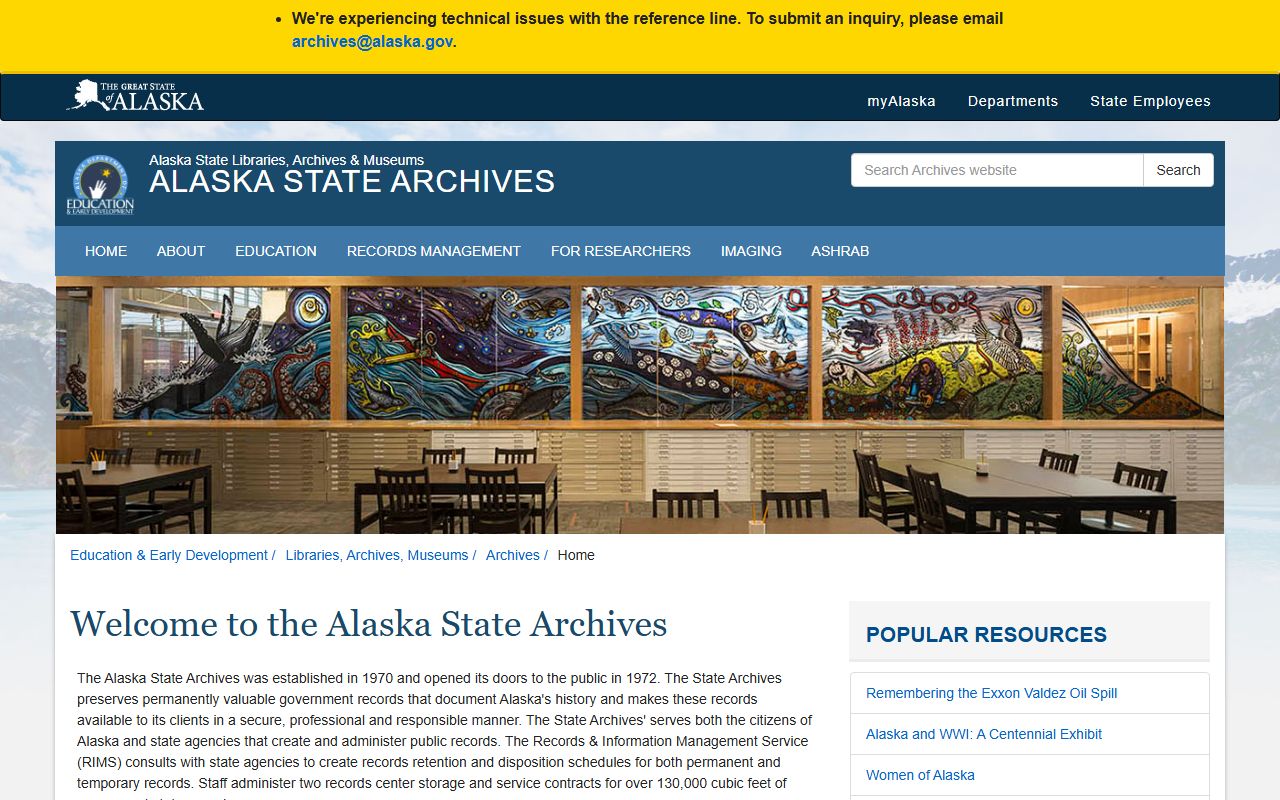
That is the place to look when the live search trail has aged out of the current system.
Hoonah-Angoon Census Area Released Inmates Links
These official links are the most useful follow-up tools when a Hoonah-Angoon Census Area Released Inmates search needs custody, court, notification, or historical context.